
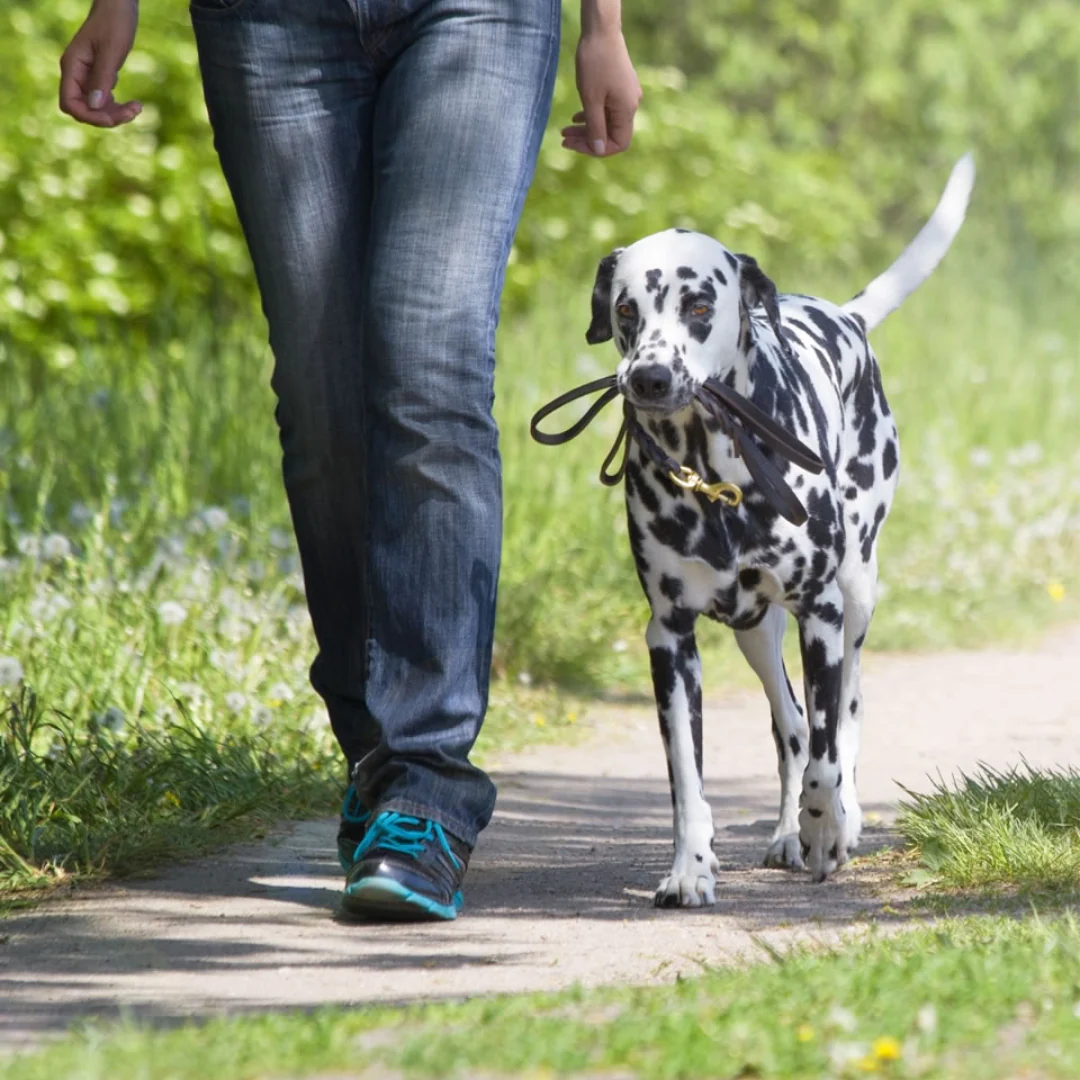
Before you start training your dog to walk off-leash, it’s crucial to ensure that your dog has mastered basic obedience commands such as “sit,” “stay,” “come,” and “heel.” These commands lay the foundation for a successful off-leash experience. If your dog is still learning these commands, dedicate some time to solidify them before progressing.
Additionally, consider your dog’s breed and temperament. Some breeds are naturally more inclined to roam and may require more training, while others might be content to stay close to you. Always tailor your approach to suit your dog’s individual personality and energy levels.

Choosing the Right Environment
The right environment plays a significant role in the success of off-leash training. Start in a secure, enclosed area such as a fenced park or a large backyard. This controlled space minimizes distractions and keeps your dog safe while they learn. Avoid busy parks or areas with high traffic where sudden distractions could arise.
As your dog becomes more confident and responsive, gradually introduce them to areas with more distractions. This progression helps your dog learn to focus on you even when there are exciting stimuli nearby, such as other dogs or people.
### Effective Training Techniques
1. Use Positive Reinforcement: Reward your dog for staying near you and responding to commands. Treats, praise, and playtime are excellent motivators. When your dog comes back to you or walks alongside you without pulling, immediately praise them and offer a reward. This positive reinforcement builds a strong association between staying close and receiving rewards.
2. Leash to No Leash: Begin with the leash attached and practice walking alongside your dog, giving the command to “heel.” Gradually increase the length of your lead or use a long-line leash to give your dog more freedom while still maintaining control. Once your dog consistently follows your commands, you can transition to off-leash walks.
3. Practice Recall: One of the most critical aspects of off-leash training is ensuring your dog returns to you when called. Practice recall exercises in a safe, enclosed space. Use a distinct command like “come,” and back it up with enthusiasm. If your dog comes to you, reward them generously. Increase the difficulty by calling them from greater distances or while they’re distracted.
4. Implement ‘Check-ins’: Encourage your dog to check in with you during walks. This can be done by periodically calling their name and rewarding them for returning to your side. This habit reinforces their connection to you and keeps them focused on you amidst distractions.
Addressing Common Challenges
Off-leash training can come with challenges, including distractions, stubborn behavior, and safety concerns. Here are some solutions:
– Distractions: If your dog is distracted by other people, animals, or scents, it’s essential to work on their impulse control. Incorporate additional training sessions where distractions are deliberately introduced so your dog can learn to remain calm and respond to you.
– Stubbornness: If your dog tends to ignore commands, revisit basic obedience training in controlled sessions. Keeping training fun and engaging is key; if you sense boredom, switch activities or locations to reignite their interest.
– Safety Concerns: Always be aware of your surroundings. If you’re in a public area, be mindful of other dogs and people. When you feel your dog is ready to explore, ensure they are in a safe, familiar environment where you can rein them back in if necessary.
Enjoying the Freedom Together
Training your dog to walk off-leash is undoubtedly a rewarding endeavor. With dedication, patience, and the right techniques, you can nurture a relationship built on trust and communication, allowing both you and your dog to enjoy the great outdoors with freedom and confidence.
Remember, every dog learns at their own pace. Celebrate the small victories along the way, and soon you’ll be taking blissful strolls together, off-leash, knowing you’ve trained your pup to respond to you no matter the environment. Happy training!