
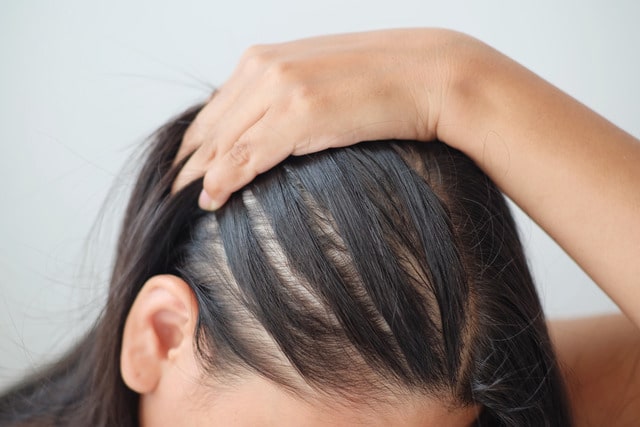
Around half of women (44–58%) feel more stressed than usual over the festive period, and as a result, more women are noticing increased hair shedding this Christmas. Experts say rising stress levels combined with overlooked medication side effects may be driving the issue.
Hair thinning is already a concern for 78% of women, and stress alongside commonly prescribed medications can worsen shedding. From contraception and antidepressants to acne treatments and hormone therapy, several widely used drugs can disrupt the hair growth cycle — yet nearly a third (29%) of patients say they were not told about potential side effects.

The common medications that may be causing your hair loss
- More than a quarter (29%) of patients taking medication report not being told about the potential side effects of their prescription
- A balanced diet rich in iron, protein, zinc, and Vitamin D is key to helping keep your hair follicles healthy and encourage growth
- Jason Murphy, hair loss expert, reveals the common medications that could be contributing to your hair loss
A recent survey reveals that only 41% of patients taking medication are definitely informed about the potential side effects of their prescription, while almost a third (29%) report not being told at all. Failing to understand medication side effects may lead to health concerns, including hair loss and thinning, which is linked to several commonly prescribed drugs.[1]
To help patients navigate this overlooked side effect, hair loss experts answer the questions that matter most, and provide guidance on which medications are most commonly associated with hair loss, why it happens, and practical steps patients can take to manage or prevent it.
Why does hair loss appear as a side effect of medication?
Jason Murphy, hair loss experts at Chemist4U, comments:
“Most medications that have a side effect of hair loss do so because they interrupt the natural growth cycle of your hair. Hair grows in phases – active growth, rest, and shedding – and some medicines can push more hairs than usual into the shedding phase at once. This type of loss, called ‘telogen effluvium’, usually appears a few months after starting treatment.”
“Other drugs can affect hormone balance, nutrient absorption, or blood flow to your scalp, which can all impact how well your hair grows. The good news is that this type of hair loss is usually temporary; once your body adjusts to the medication, or the medication is stopped, hair typically regrows.”
The seven medications most commonly linked to hair loss
“If you’re worried that certain medications may be causing hair loss, speak to your GP or pharmacist before making any changes; they will be able to check if your medication could be contributing and prescribe alternatives. If the medication is the likely cause, switching to a different option often helps, but it can take some time. Once the medication has finished, you’ll usually start to see improvement within three to six months, as your hair growth cycle rests.”
- Acne treatments:
Some acne treatments, especially those high in Vitamin A derivatives, can lead to hair loss by disrupting the hair growth cycle or affecting hormones. For example, high doses of oral retinoids such as Isotretinoin can push hair follicles into the resting phase, causing temporary shedding. Various topical creams , such as those including Retinol, Benzoyl Peroxide and Salicylic Aci,d can cause scalp irritation that contributes to hair loss.
With acne being one of the most common skin conditions in the UK, leading to 3.5 million visits to primary care every year, it is crucial to discuss any hair loss concerns with a GP or dermatologist before starting or adjusting treatment, so the best approach can be tailored to both skin and hair health. [2]
- Beta blockers:
Beta-blockers can cause hair loss by disrupting the hair growth cycle and pushing more follicles into the resting phase prematurely, which leads to noticeable shedding after a few months. This is typically temporary and reversible upon termination of the medication or the dosage is adjusted. Hormonal effects can reduce blood flow to the follicles and directly impact the hair follicle itself, which can overall contribute to hair loss.
- ACE inhibitors:
ACE inhibitors can occasionally cause hair loss by affecting blood flow and disrupting the hair growth cycle. By relaxing blood vessels to lower blood pressure, they may reduce blood supply to hair follicles, limiting oxygen and nutrients and contributing to shedding. This typically results in telogen effluvium.
- Antidepressants:
Some antidepressants can lead to hair thinning by interfering with the hair’s three-phase natural growth cycle (anagen, catagen, and telogen), prompting a larger number of hairs to shed prematurely and altering hormone levels that support follicle health. Hair loss may appear a few months after starting or adjusting the medication, and while usually temporary, it can be influenced by changes in stress, nutrient absorption, or blood flow to the scalp.
- The contraceptive pill:
Contraceptive pills can cause hair loss by altering hormone levels, particularly through synthetic progestins that act like androgens. These hormonal changes can stress hair follicles and accelerate the hair growth cycle, causing more hair to shed early. With the contraceptive pill being the most popular method among Sexual and Reproductive Health service users in the UK, it has been revealed that almost a third (28%) of those on contraception chose the pill as their preferred method, and could see these side effects as a result.[3]
- Hormone replacement therapy:
Hormone replacement therapy (HRT) can lead to hair thinning due to the types of hormones used, such as synthetic progestins or testosterone, which may promote androgenic effects (the influence of male hormones on the body). Fluctuating or imbalanced hormone levels from starting or adjusting HRT can also disrupt the hair growth cycle, causing more hair to shed prematurely. The impact varies depending on the specific HRT formulation and a person’s genetic predisposition, with some hormones, like estrogen, generally protective, while androgens or testosterone-related DHT can accelerate thinning.
- Chemotherapy:
Chemotherapy drugs are the most well-known cause, as they target and damage fast-growing cells, including those in your hair follicles. In most cases, hair loss from medication is temporary and tends to reverse once treatment stops or your dose is adjusted.
How to manage or prevent this side effect
Gentle hair care makes a big difference, so it’s important to avoid using too much heat, tight hairstyles, or chemical treatments while your hair is recovering. Using mild, sulphate-free nourishing shampoos and keeping your scalp clean and hydrated supports new growth.
It is important to note that while overwashing can strip the scalp of natural oils, washing infrequently can have the opposite effect and lead to buildup that may block hair follicles, increase inflammation, and contribute to excess shedding. While dry shampoo can be convenient between washes, overuse may cause residue to accumulate on the scalp; therefore, aim to wash your hair every three days to maintain a healthy balance.
Jason Murphy, hair loss expert at Chemist4U, comments:
“A balanced diet rich in iron, protein, zinc, and Vitamin D is key, as these nutrients help keep your hair follicles healthy and encourage regrowth. If blood tests show a deficiency, supplements can help. However, supplements aren’t always necessary, and taking high doses ‘just in case’ can sometimes make things worse.
“Lifestyle factors like good sleep, hydration, and managing stress all help your body bounce back faster. In most cases, hair regrowth happens naturally once the underlying cause or medication side effect settles.”
The underlying health conditions that are more likely to cause hair loss
“Thyroid disorders are one of the most common causes. Both overactive and underactive thyroid can disrupt the hair growth cycle and cause diffuse thinning across your scalp. Low iron or vitamin D levels can also lead to shedding, as your hair needs both to grow and repair properly.”
“Autoimmune conditions like alopecia areata, where your immune system mistakenly attacks hair follicles, can cause small, round bald patches, while hormonal changes linked to polycystic ovary syndrome (PCOS) or menopause can also trigger thinning. It typically affects 85% and 40% of women by the age of 50. In each case, treating the underlying condition usually helps hair growth recover, so it’s always worth checking in with your GP or pharmacist if you notice persistent or unexplained hair loss.” [4]