
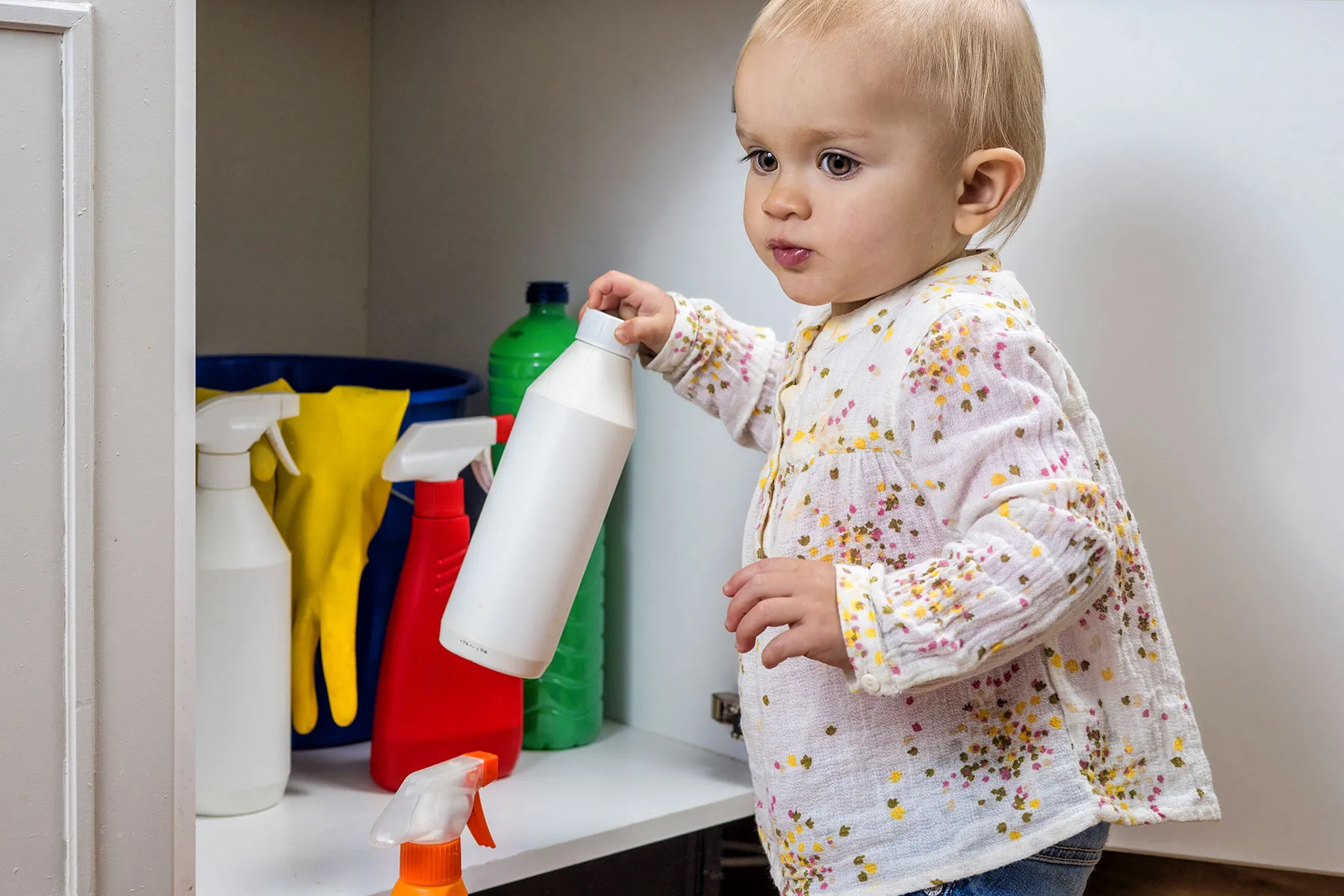
Every 15 seconds, a child in the U.S. is exposed to a potentially toxic substance. New national data shows this is not a rare accident or a one-off mistake. It is a constant, everyday risk happening inside American homes.
Anidjar & Levine analyzed newly released U.S. poison exposure and child safety data and found a sharp break from decades of progress. In 2022, 98 children died from unintentional poisonings, up from 59 deaths in 2021 and the highest total since 1976.

This matters right now for consumer safety, parenting, and public health coverage. Despite child-resistant packaging laws, poisonings linked to common household products, medications, and newer consumer items are increasing, not declining.
Key Findings:
- 2,080,659 poison exposure cases were reported to U.S. poison centers in 2023.
- 1 poison exposure occurs every 15 seconds nationwide.
- Children under 6 experienced 32.1 exposures per 1,000 children, the highest rate of any age group.
- 99% of poison exposures in children under 6 were unintentional.
- Household cleaning products caused 87,031 pediatric exposures, representing 10.1% of cases.
- Analgesics caused 78,993 pediatric exposures, accounting for 9.1% of cases.
- Pediatric poisoning deaths reached 98 in 2022, up from 17 deaths in 2018.
- Nicotine pouch exposures increased 763% from 2020 to 2023 among young children.
Analytical Snapshot: Chemical Exposure vs Federal Monitoring in U.S. Toddlers (Ages 2–4):
| Analytical Dimension | Verified U.S. Data | Federal Monitoring Status | Why It Matters |
| Study population | 201 children (UC Davis, 2025) | Research cohort only | One of the few U.S. studies focused solely on preschoolers |
| Total chemicals detected | 96 | NHANES tracks a limited subset | Confirms multi-chemical exposure is the norm |
| Chemicals in >90% of children | 34 | Incompletely monitored | Exposure is routine before kindergarten |
| Untracked chemicals | 9 of the top 34 | Not in NHANES | Federal blind spot affecting most toddlers |
| Dominant chemical classes | Plasticizers, bisphenols, pesticides, flame retardants | Split across agencies | Fragmented oversight weakens accountability |
| Exposure setting | Primarily household | Not environment-specific | Kitchens, bathrooms, and dust drive exposure |
| National exposure volume | 2,080,659 cases (2023) | NPDS real-time tracking | Confirms constant nationwide risk |
What This Data Reveals:
- The home is the primary danger zone. Most pediatric poisonings involve everyday products found in kitchens, bathrooms, and laundry areas. These are not industrial chemicals or rare substances, but items families use daily, often within easy reach of toddlers.
- Risk is not evenly distributed. Some products cause fewer total exposures but lead to far more severe medical outcomes. Alkali drain and oven cleaners, for example, make up a smaller share of cases but account for 15–21% of severe poison injuries, showing that frequency alone does not reflect true danger.
- New products are outrunning safety rules. Rapid growth in nicotine pouches and cannabis edibles has created exposure pathways that existing packaging and labeling laws were not designed to address. The data suggests regulation is reacting after harm occurs, not preventing it.
Why This Matters Now:
This is a live and growing public safety issue. Poison centers handled more than 2 million exposure cases in a single year, while pediatric poisoning deaths climbed to their highest level in nearly five decades. Emergency department-treated poisoning injuries also rose 10% year over year, showing harm is increasing beyond fatalities. As lawmakers debate poison-center funding, consumer product oversight, and child safety enforcement, these numbers show the cost of delay is already measured in hospitalizations, long-term injuries, and child deaths.
Data Sources:
- UC Davis Health ECHO Study on chemical exposure in U.S. children ages 2–4 (2025)
- CDC National Health and Nutrition Examination Survey (NHANES) documentation
- America’s Poison Centers, National Poison Data System Annual Report (2023)
- Peer-reviewed U.S. studies on pediatric chemical mixtures and household exposure
Full study here: https://www.anidjarlevine.com/research/unintentional-pediatric-poisonings-in-the-u-s/?utm_source=outreach&utm_medium=shared